M. H. Shakir, The Holy Quran; Arabic Text and English Translation; Foot-notes by M. H. Shakir (1974)
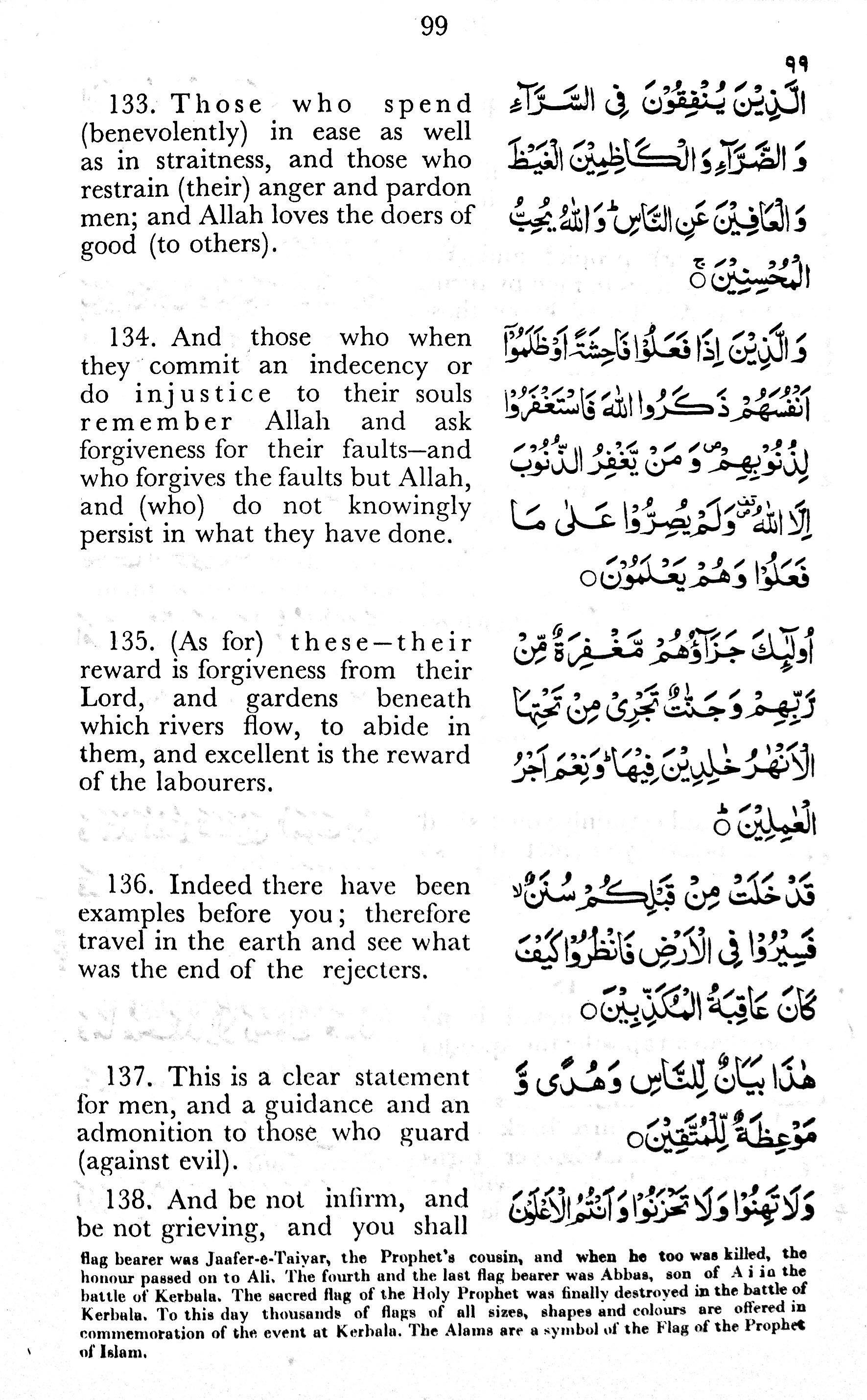
133. Those who spend (benevolently) in ease as well as in straitness, and those who restrain (their) anger and pardon men; and Allah loves the doers of good (to others).
134. And those who when they commit an indecency or do injustice to their souls remember Allah and ask forgiveness for their faults — and who forgives the faults but Allah, and (who) do not knowingly persist in what they have done.
135. (As for) these — their reward is forgiveness from their Lord, and gardens beneath which rivers flow, to abide in them, and excellent is the reward of the labourers.
136. Indeed there have been examples before you; therefore travel in the earth and see what was the end of the rejecters.
137. This is a clear statement for men, and a guidance and an admonition to those who guard (against evil).
138. And be not infirm, and be not grieving, and you shall
flag bearer was Jaafer-e-Taiyar, the Prophet’s cousin, and when he too was killed, the honour passed on to Ali. The fourth and the last flag bearer was Abbas, son of Ali in the battle of Kerbala. The sacred flag of the Holy Prophet was finally destroyed in the battle of Kerbala. To this day thousands of flags of all sizes, shapes and colours are offered in commemoration of the event at Kerbala. The Alams are a symbol of the Flag of the Prophet of Islam.